
New! 5 weekly tips: resources, ideas for those with teens & adult children
It's not just their brains it is their hearts too, smartphone advice, 2 new teen parenting experts to follow.


1) Don’t neglect their spirituality
According to the US magazine Psychology Today we are living through the ‘age of overindulgence’ when it comes to parenting. Many of us are giving our offspring ‘too much’ - be that possessions, attention, activities, experiences, demands.
And in doing so we may be hindering their development. Over indulging essentially meets the parents’ needs, but not the child’s. It does not teach our mature offspring the importance of responsibility, delayed gratification, or self-reliance.
This over indulgence, which I think we may all have a tendency towards sometimes, may stop or delay our teens and adult children separating from us successfully, it’s unhelpful and while it makes us feel good about ourselves it doesn’t empower them to feel great about themselves.
It’s not just the realm of the more privileged where this may happen; generally we are all doing more for our kids (out of the best intentions) with our more child centric parenting patterns and we should question this.
One of the ways we can step back a little, according to my research, is to remember that while we tend to define adolescents by the huge neurological transformation of puberty we may be forgetting the spiritual side of growing up, the emotional heart-led part of our teens which will seek to feel connected to something bigger than themselves.
Teens are driven by a need to belong, and we’re always talking about their physical developments and how their brains are being taken apart and rebuilt as if they are just made up of their biology but the teenage years, perhaps more than any other time, are also a time of deeper spiritual thinking and seeking connection.
I know you’re looking at your teen doom scrolling right now and thinking I’ve gone mad, they are about as spiritual as a turnip, but there is much science and research to support this. Have a look at Dr Lisa Miller’s The Awakening Brain for the evidence of my hypothesis. So while you’re pottering around with your teenager it may be worth recognising their spiritual side more frequently because in doing so you are also helping protect their mental health.
Dr. Lisa Miller, author of The Spiritual Child, advises parents, that nurturing a teenager’s innate spirituality protects against depression and addiction, often reducing risks of poor mental health by over 80% she says. Miller encourages parents to ‘listen to their teen’s unique, internal spiritual journey, act as guides rather than authorities, and model an authentic, personal, and curious spiritual life.’ Dr Miller’s interview with Lewis Howes is a good watch if you have time (it is a podcast too).
So how do we do this?
I am not talking about taking up a religion if you do not already have one but more the little daily things like reminding them to be thankful to people, to be grateful for their daily glimmers, getting them out in nature, chatting about love and relationships, bringing the more emotional subjects into their physical world (you can use telly/the news etc as jumping off points for causal chats).
A brilliant question to spark your teens spiritual side is to ask them; who do you love? Get them to ask it each morning when they wake up. This questions may help programme the mind to think about the soft power of our life, the people; not the possessions and activities. It’s a good way into recognising how open teens will be to conversations around what they feel, especially boys. Give it a go and let me know what you find. I used to leave post-it with ’Do one Kind Thing Today’ written on it stuck to our front door so that as they left the house that was thier last though. I don’t know if it works, it certainly made them eye roll me as they got older but I hear them laugh about it today and I reckon a subliminal message got through!
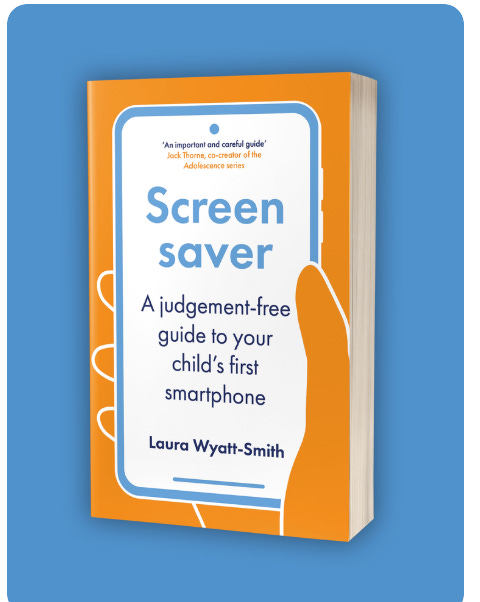
2) Screensaver: a new book for the smartphone generation
This is a helpful new guide on how to set up your teens smartphone Lots of advice in it and a good reminder that Commonsense.org is full of reviews of Apps for parents. Helpful even if you think it is too late for you & your teen to chat screen time boundaries and digital health.
3) Parenting influencers tackle teens and adult children at last
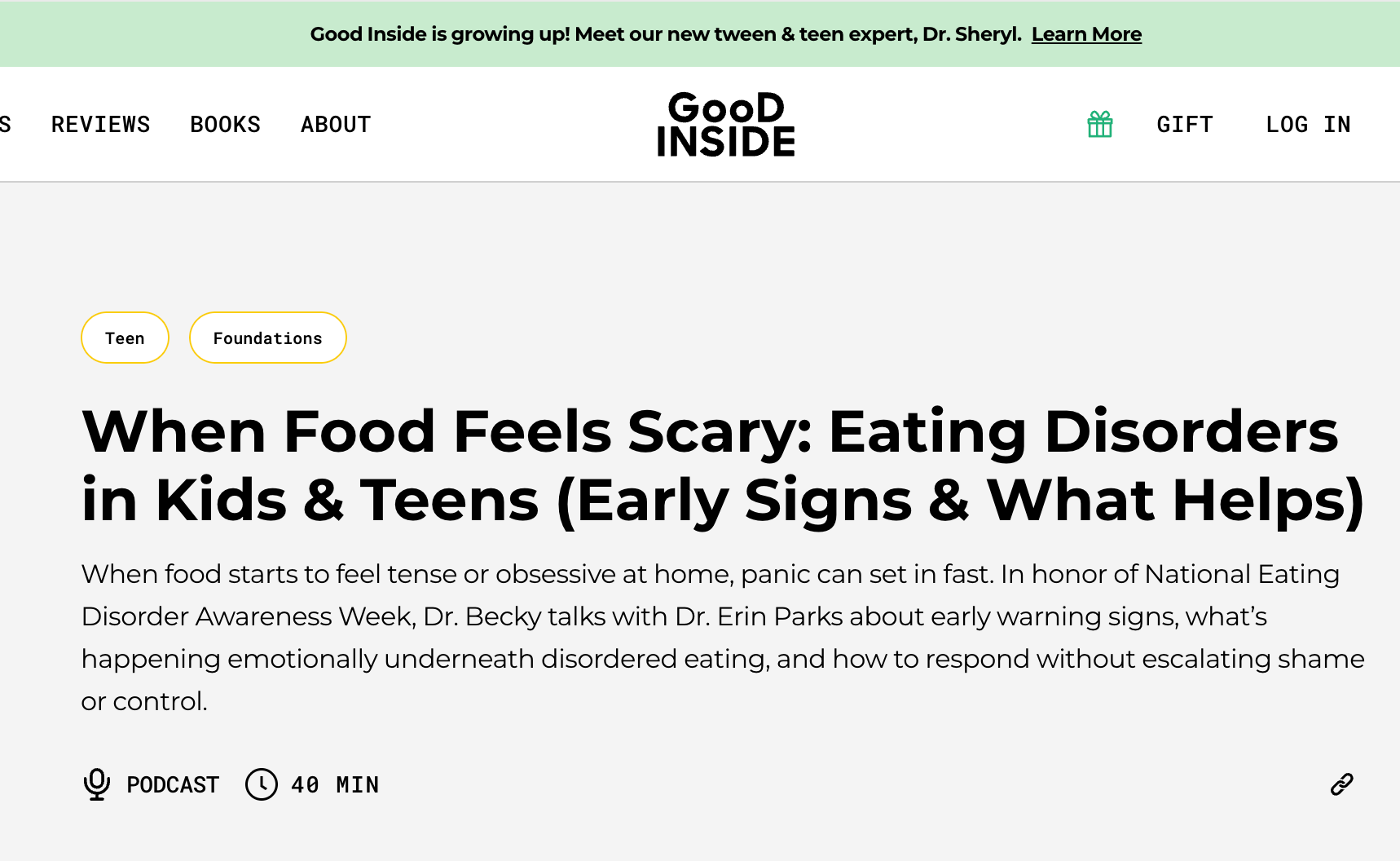
Millennials have had some brilliant parenting experts alongside them online and on social media - such an improvement on Supernanny and Gina Ford IMO - and now those experts are watching their children grow up and starting to cover the issues which affect you. Dr Becky Kennedy’s Good Inside platform and podcast has taken on a new expert to help those with teens and the advice from Dr Sheryl Ziegler is great so far. And I found Dr Becky’s interview with eating disorder specialist Dr Erin Parks (above) extremely helpful if you need that subject tackled for you: it is relevant to all ages not just teens and will help you understand your attitude to food too.

4) UK Government announces V-Levels: 16 new Vocational training qualifications
These roll out in 2027 but are explained here - it looks like B-Techs will be phased out and these (which start with education, finance and digital as subject matter) will sit alongside A-Levels. As some one who did not do A-Levels I find this to be good news for our young people facing a future where many jobs simply won;t exists any more due to AI.
5) Setting high expectations for sons everywhere Jacob Elordi
Bringing Mom to the Oscars Kate Hudson (obviously), Michael B Jordon and Miles Caton also brought their mums and on TikTok I learnt that the most thanked person at The Oscars in it’s history is ‘mum” apparently (though I cannot verify this and Steven Speilberg appears to be the most thanked famous person!).
NEW! COMING SOON HERE:
How not to lose your sh*t with your teens/adult children: a new expert explainer video with Dr Beth Mosely family therapy expert, what to say when you feel your off spring are living an un healthy life, how to help with making choices for education (from GCSE subjects , to Gap year, jobs, partners) and skin care tips/products for young people


PS As usual this guidance is not for those with SEND or more complex parenting issues.